

One of my all-time fave indulgences is going to the spa. To me, it’s heaven. It’s relaxing, it’s pampering, and it’s rejuvenating. Are you with me on this? Well, it gets better. Researchers are starting to discover that spa treatments have bona fide health benefits.
The origins of spa reach back to our earliest civilizations: ancient Egyptian, Greek, and Roman cultures (among others) regularly engaged in ritual purification and bathing in hot or cold springs. The practice of bathing in–and drinking–mineral waters for health and wellness has played a role in many societies. Health spas and resorts became a fashionable trend in the 17th and 18th centuries (think Bath, England). At various points in history, physicians routinely prescribed spa attendance and mineral bathing practices.
But somewhere along the way we’ve lost the health connection. North American spas today seem to focus on esthetics, pampering, and relaxation. But not exactly on preventive health or medical treatment, per se. In contrast, European spas have retained the health aspect. In fact, spa treatments are often covered by the national health insurance plan in France. (Sigh. Yet another reason to come back to this life re-born as a French woman, no?)
Anyway.
For years, I’ve believed there are true physical & health benefits to be gained at the spa. Didn’t matter to me that we hadn’t quite “measured” it yet. That there wasn’t sufficient evidence to prove it. (Beyond the thousands of years of use, that is)
But now—turns out, a little research is starting to stack up showing health benefits of various spa treatments.
‘Bout time, I say.
So what are the studies showing?
A recent study compared groups receiving deep-tissue massage vs. light massage, taking blood samples before and after the massage. Participants with deep-tissue massage had post-treatment decreases in cortisol levels (a key stress hormone), and increases in white blood cells (important for the immune system). This might indicate a role for massage in treating inflammatory and autoimmune conditions.
Another study looked at the effect of massage on women with breast cancer. Following massage, the women showed improved scores in a perceived stress questionnaire and had lower serum cortisol levels.
Massage has also been shown to benefit people in the workplace. In one study, the group that received workplace-based massage therapy had significant reductions in blood pressure than those who didn’t get massages.
A recent French analysis of research on spa therapy and hot-water balneology (the therapeutic use of mineral baths), unearthed several small studies showing benefit for the following conditions:chronic low back pain, rheumatoid arthritis, ankylosing spondylitis, fibromyalgia, and osteoarthritis.
Reflexology has been shown to decrease PMS symptoms in women.
Aromatherapy has been shown to improve insomnia and depression among female college students.
Anyway…I could go on, as this is just a sampling of the research that’s beginning to surface.
A day at the spa because it’s good for me? Bring. It. On.
In the short term, inflammation is not a problem. It’s the body’s normal response to injury, and it’s a healing response. It’s also part of our immune system, and how we fight infection. But when inflammation doesn’t shut off like it should, and becomes chronic? That’s a problem.
Why inflammation is bad for you
We’re not talking about the kind of swelling that occurs with an ankle sprain, here. No. We’re talking about the process that, increasingly, is turning up as the culprit in a plethora of serious diseases that you just don’t want: heart disease, cancer, Alzheimer’s, and autoimmune diseases like lupus and rheumatoid arthritis. This kind of smoldering inflammation occurs without our awareness. It leads a stealth attack on our own tissues and organs. It produces a cascade of chemicals (like prostaglandins) that seethe throughout our bodies. And unless we take steps to stop that inflammation, we’re going to end up aging faster and falling prey to chronic disease.
So, what to do?
Dear Inflammation: Your services will no longer be required
The good news is that you can modify your body’s own inflammatory reaction. Start here: with an anti-inflammatory diet. This is not a diet, per se, in that you’re aiming to lose weight (although you may find that happens naturally). This is a diet to help you improve your health.
Eat Less or Eliminate:
Eat More:
Truth be told, there’s a lot of crossover in this diet with the Mediterranean diet. No coincidence, there. People in the Mediterranean just so happen to have lower rates of many of the chronic diseases we’re trying to avoid, like heart disease and rheumatoid arthritis.
If you liked this article, you also might be interested in reading:
Looking for more information on the anti-inflammatory diet? Check out the good Dr. Andrew Weil’s Anti-Inflammatory Food Pyramid here. (Most excellent.)
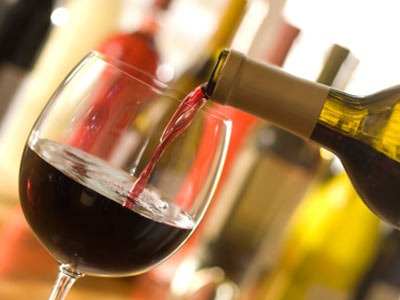
Who doesn’t love wine? In my opinion, it’s truly the drink of the gods. So how awesome was it, years ago, when research started revealing the health benefits of wine?
Most of us know wine is full of antioxidants, and is great for preventing heart disease. No secret there. But I recently found a couple of benefits that aren’t so widely known. (Of course if you’re like me, you don’t need more reasons to drink up. Here goes anyway):
Wine benefits women’s sexuality
A study (of nearly 800 women, ages 18-50) was published in Oct 2009 in The Journal of Sexual Medicine that showed that the regular, moderate intake of red wine was associated with higher sexual desire, lubrication, and overal sexual function, as compared to teetotallers.
How lovely.
Another benefit?
Wine is associated with better cognitive test performance
This study was performed on 2000 subjects in Norway, and published in the Journal of Nutrition in January 2009. It showed that people who consumed flavonoid-rich wine, chocolate, or tea had significantly better scores on cognitive tests than those who did not. Participants who consumed all 3 goodies (chocolate, wine, and tea) had the best test scores. The effect was most pronounced for wine, and a little weaker for chocolate.
And a big cheers to that.
So you feel, well, okay. But is okay good enough? Could you do better?
Time to be honest…with yourself. Because prevention, in my book, is far better than waiting for symptoms to appear.
Below you’ll find some questions to answer. Now, this is not a multiple choice quiz, with a cute classification scale at the end. These are open-ended questions. That’s because I’m assuming you’re a smart cookie. More important than a tidy little category is how you feel when you look at your answers all together, when you read them over, when you really start thinking about it.Most of us know, deep down, what we need to work on…we just need some prodding. And someone to pose the questions.
One further note: these questions are not intended to make you feel guilty. They are intended to jostle your brain, to give you something to think about. Perhaps to serve as a wake-up call. To get you thinking about what you are doing great (yay!) and what you could improve upon. This is a starting point. A time for reflection.
So, get out a notebook and get ready to jot some stuff down. Ask yourself:
Lifestyle
Do you get enough sleep for you? This might be 8 hours, or more, or less. More important: do you wake up feeling groggy? Check your eyes: just how dark are those circles, darling?
How is your alcohol intake? One glass of wine a day = purrrfect. More than that? Hmmmm…
Do you smoke? Sweetheart, you really gotta quit. Gonna quote Skinny Bitch on this one: smoking is for losers.
Exercise: are you moving that bod enough? Come on, fess up.
Any idea what your BMI is? Here’s a handy little tool for ya. (no excuses)
Testing
When was the last time you had your blood pressure checked? High blood pressure is silent. You would never know, unless you checked.
When was your last Pap? Here are my thoughts on this: Yes, Pap smears are uncomfortable. Know what’s more uncomfortable? Cancer.
Have you had screening bloodwork done lately? Here are some things to consider having done, depending on your risk factors:
And speaking of screening, if you’re over 40 have you had a mammogram? (screening recommendations might be different if you have a family history of breast cancer)
How about STD screening? Once again: silent. With nasty repercussions if left undiagnosed + untreated.
Prevention
Look at your family history. If there’s a strong history of CAD, cancer, etc…are you being proactive about not following in their footsteps?
Are you taking care of your bones? Not just for the elderly–you need to build bone mass now.
Do you wear sunblock? All. The. Time?
Body + Soul
What about stress? I’m gonna go ahead and assume you’ve got stress (we all do, don’t we?)…but do you have a plan in place to cope with that stress? Short-term and long-term coping, I mean.
How often do you have sex?
Are you happy? Like, really content in your life? Here’s a quick test: how do you feel on your birthday? As though you’re exactly where you should be….or, vaguely dissatisfied/anxious/frustrated?
Do you do stuff that’s just for you? Like, go to the spa, read a book for pleasure, fill in the blank…?
Do you feel fulfilled? Are you bored? Are you pursuing your dreams? Are you working too much?
Nutrition
Eating habits? Big topic. Here’s some food for thought (ptp=pardon the pun)
Now how about Vitamins + Supplements:
Okay, ’nuff for now. There’s more, but I’m going to leave it for another day. Hope you’re not feeling too overwhelmed. Keep in mind: it’s important to take the time to reflect on this stuff and take stock. It’s your body, after all. And it’s your life.
Ya get but one.
Lost your zip? Too tired to even…go shopping?
As promised, here’s another disco of energy-boosting ideas. (See here for my first 3 tips)
1. Drink Up
Mild dehydration can easily creep up on you. Trouble is, even slight dehydration can sap your vigor—your body has to work harder to pump a smaller blood volume around.
Using thirst to dictate your fluid intake? Not a good idea. Thirst is a poor indicator; by the time you’re craving that cool drink your body is already withering.
Instead, aim to sip throughout the day. Try drinking a glass of water first thing in the morning, just before bed, and with each meal. Or keep a water bottle on your desk, and refill it when you take breaks.
Eight glasses a day is a reasonable guideline, but everyone’s requirements are different. Ensure you drink enough so you’re going to the ladies’ room every two to four hours.
2. Eat for Energy
To fuel your body, you need food. But will any type of food do? Nope.
Despite the bad image carbs have received, they’re still you’re body’s first choice for energy. It’s complex carbohydrates that you want, however—like whole grains, sweet potatoes, squash, pumpkin and carrots. Unlike simple sugars that give you a burst of energy and then a dip, complex carbs are absorbed and digested slowly. This keeps your blood sugar level constant.
Fibre is also important for sustained blood sugar. Fibre causes the body to absorb carbs more slowly. So choose whole grains over white bread, rice, and pasta.
Protein is the other important food that will deliver a slow, steady burn of energy. Choose lean, unprocessed sources: chicken, fish, nuts and legumes.
3. Seek Balance
Women are master multitaskers. We have busy lives and competing priorities. But sometimes we simply spread ourselves too thin. If you’ve got too much going on, perhaps it’s time to make a change. If your va-va-voom is suffering, your body is telling you something. Listen to it.
Start by paring your priority list. Take that long put-off vacation. Make time for yourself. Soak in a bubble bath, stretch out in yoga class, indulge in a full spa massage, listen to music, rent a comedy and laugh your heart out.
4. Get Moving
Too tired to open a soup can? Why not go for a jog instead?
Yes it sounds illogical, but you’ll be surprised at the effect exercise can deliver. Physical activity gets your limbs moving, your blood flowing and your heart pumping. It’s invigorating. And, if you start exercising regularly, you’ll enjoy other energizing benefits. Like stress reduction and better sleep.
What’s more, I can almost guarantee that catching a glimpse in the mirror of a trimmer silhouette will perk up your day.
5. Lose weight
If you were forced to drag twenty-pound dumbbells around all day, you’d find yourself tiring easily, right? It’s the same when your body’s own frame is carrying that excess weight.
A fitter, leaner you will move confidently and rock it with way more energy.
Of course, losing weight is easier said than done. But the changes that will help you ditch those extra pounds—exercising more, eating a healthier diet—are things that will also give you pep in the short term. So, even before you notice that your pants aren’t quite so snug, you should be feeling uplifted.
Energizing bonus of weight loss? A fab excuse for a brand-new wardrobe.
6. Recharge
Sometimes, the answer to our troubles is the simplest one. Tired throughout the day? Perhaps you need to get more sleep.
Think of your cell phone. If you don’t recharge it, it cuts out (well, after it does that incredibly annoying beeping thing). Your body works the same way. You’ve got to recharge. Superwoman you might be, but we all need sleep.
Research shows that people who are sleep-deprived have poor concentration, a crummy sense of humour, and increased health issues.
Everyone has different sleep requirements, but it’s usually somewhere between seven and nine hours per night. Experiment a little to figure out your ideal quota, then stick to it.
It’s not always easy to get the sleep we need, of course. Yes, you could always get one more task done if you postpone bedtime, but you’re going to suffer in the long run. So, lights out, please.
7. Deal with Stress
Stress is the scourge of our modern lives. Truth be told, it’s the reason lurking behind a huge proportion of doctor’s visits. And it’s the core factor beneath an awful lot of fatigue.
It’s not that you’re merely imagining your dwindling energy. It’s more than that. A deep mind-body connection exists that we don’t fully understand. But we do know that stress exerts a harmful effect on our health and sense of well-being.
Is your fatigue truly due to deep-down stress? The only person who can answer this is you. You need to take a penetrating look at your life. And be straight with yourself.
Whether it’s a stressful job, relationship troubles, financial worries or something else, it’s time to stop ignoring it. You have to face up to the big stressors in your life and deal with them. (Read this for 50 tips on dealing with stress)
Don’t tackle all of the above at once. Start with the ideas that most capture your fancy, and get set to rediscover some pizzazz. Not just to make it through your ‘to do’ list, but also to enjoy life more.
.
Looking for some easy, non-diet-ish ways to lose a little weight? Read on.
Eat mints right after a meal. The powerful flavor will cut your appetite, sending a message to your brain that the meal is done. The sweetness will curb an urge for dessert.
Deal with cravings. Most cravings will pass in 15 minutes. When you get blindsided by an irresistible need for a Skor bar or All-Dressed Ruffles, set a clock and distract yourself through it. Take a shower, go for a walk outside, read a deliciously trashy book, paint your nails, whatever it takes.
Leave the lasagne dish in the kitchen. People will eat 30% more when the serving bowl/platter is on the dining table.
Drink green tea. Studies suggest that it can temporarily boost your metabolism, perhaps through the action of phytochemicals called catechins.
Eat soup. Starting your meal with a bowl of broth-based soup will fill you up (with relatively few calories), and slow your eating. Minestrone or French Onion are good examples. Beware fat and calorie-laden cream soups.
Trick yourself. Think of your urge to eat junk food as an enemy (get specific: the bitch from 10th grade will work perfectly)…she’s trying to make you unhealthy, trying to make you fat. Show her who’s boss.
Get hot. Capsaicin–the stuff that gives hot peppers their kick–has been shown recently to help curb appetite and give a little boost to metabolism. Temporarily anyway.
Shrink your plate. Recent research has shown that people eat more when using larger plates and dishes. At supper, use a lunch-size plate instead of a dinner plate, and you’ll automatically eat less. A study at Cornell found that this little eye/mind trick cut 200 calories from subjects’ daily intake–without feelings of hunger.