I frequently write about the challenges moms face in terms of getting healthy (and staying there).
One of the things I’ve been thinking about recently is the challenge of Me Time.
On my personal blog, I shared a little story last week: What I learned about Me Time (and about myself) when my husband and kids went out of town for three days (yes, leaving me blissfully alone in my own house for the first time in ages).
It was an interesting lesson–and not what I expected.
Also, a while ago, on my YMC blog I wrote about the issue of Me Time from the perspective of a WOHM (work-outside-the-home mom). It was a sister post to a fellow YMC blogger’s take on Me Time as a SAHM.
So, how about you? If you’re a mom–how do you carve out Me Time? And how important do you think it is, in terms of overall health?
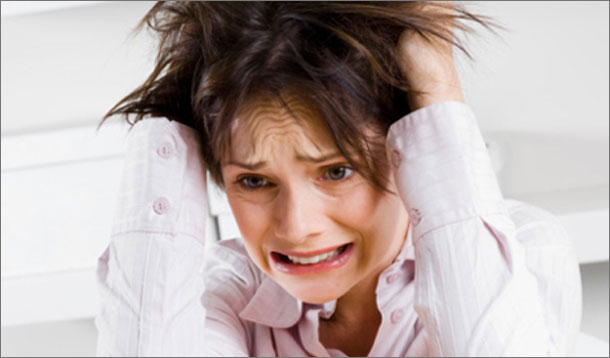
I’m preparing a workshop called Stress Detox that I’m giving next week, so I’ve been thinking about stress a lot lately. It’s a topic I’ve written about many times in the past…but looking back on my old posts, I think I’ve neglected to give an overall view of my approach to stress management.
In the past few years, after much reading and real-life experience helping patients, I’ve come to feel that there are three major spheres when it comes to dealing with your stress. Three types of approaches–and, ideally, you want to work on all three.
No matter how you’ve structured your life, you’re always going to encounter stress. Life is unpredictable. And, some situations can’t be changed (see #2). But that doesn’t mean you have to suffer when stressful stuff happens. Short term stress-busters are skills that you can learn. These are things that you can do, in the immediate moment, to help cope with your stress reaction. Here are some of those coping strategies. And here. And here.
If your stress is out of control, there’s a good chance something’s gotta change. Maybe you’re overcommitted. Or trapped in a bad relationship. Struggling in a toxic workplace. These sorts of external stressors need to be changed, because no matter how many yoga classes and breathing exercises you do, you’re not going to be able to fully manage your stress until you make some changes. Of course, easier said than done. If you’re feeling stuck, you may need to talk it out with a counsellor. Sometimes, of course, things can’t be changed. Your situation is what it is, and you simply have to deal with it. That’s when you really need to work on #1 and #3.
Here, I’m talking about your long-term strategy. Because, let’s face it, shit is always going to happen. And it’s not good enough to just cope with stress when it hits you in the face. Better, is to give yourself some resilience, some stress hardiness. How do you protect yourself from having a meltdown with every little blip? You shore up your reserves. With sufficient sleep, regular exercise, a healthy diet. Here are some other ways to build a stress-resilient lifestyle. And here.
So, how about you? What do you find helps the most with your stress? What are your coping strategies?
There’s nothing quite like illness to wreck your holidays, am I right? Give yourself the gift of health this year. Here are my thoughts on how to stay healthy this holiday season:
Seems like everyone is sniffling, sneezing, or coughing. Viruses are a fact of life in the winter, but does that mean there’s nothing you can do to avoid them? Not at all. Keep yourself healthy with my top tips. LIke zinc. And probiotics. And washing your hands. But…if you do happen to get a cold or the flu (it happens to the best of us)…here are 12 natural remedies for those nasty viruses.
I know it’s tempting to hibernate as temperatures drop, but resist this temptation. There are so many benefits to be gained from regular exercise; don’t rip yourself off! Exercise helps with preventing colds, managing stress, improving sleep, and, of course, fending off excess turkey/chocolate/shortbread pounds. The things to keep in mind when it comes to exercising outdoors: dress warmly in LAYERS. Warm up sufficiently. And, because the winter days are so short and you may very well be exercising in the darkness, make sure you are visible (reflective patches, headlamps).
Stress is rampant at this time of year. But it doesn’t have to be a given. If I had to give just one tip: simplify. (But, lucky for you, I do happen to have several other ideas.) See my recent YMC post, Holiday Stress Survival Toolkit, for 10 ways to kick stress to the curb this Christmas.
Is there any evil quite so perfect as the hangover? It’s such a fun combination of physical misery with the particular misery that comes from knowing it’s your own. damn. fault. Still, we’ve all been there. And, obviously, the best thing is to drink in moderation. But if that doesn’t exactly pan out, here’s your morning-after rescue kit:
Of course, when it comes to hangovers, the only surefire treatment is time. And if you have the luxury of going back to bed, do that. Your body will heal itself with rest.
Happy Holidays, everyone!
I have written about cancer in the past (how to prevent it, what foods help fight it, new research into prevention…), and I’ve certainly touched on the fear of cancer in previous posts (and TV appearances!). But today, on Yummy Mummy Club, my post is all about the fear of cancer. That’s because the fear of cancer is HUGE. A recent study showed that 70% of us fear cancer–and that’s over and above all other (suitably fear-inducing) illnesses like heart disease and diabetes.
So in the face of something so terrifying, where do you start? How do you begin to conquer a fear of cancer?
Well, I have some thoughts. Head on over to my YMC post, Facing A Fear Of Cancer, to see what I’ve got to say.
Yesterday I wrote a post called Stress Relief For Moms in 60 Seconds Flat. The rationale: moms typically have stupid amounts of stress. But also: no time. Sure, it would be great to decompress on a regular basis with standing appointments at the spa, daily trips to the yoga studio, etcetera. But who has the time for that? (Not to mention the money.)
So it’s my mission to bring quick stress relief to moms (and anyone else, for that matter, who’s got stress and a time crunch. Or stress because of a time crunch, even.)
I’ve written about this topic before, but stress management is evergreen. We’re always going to need tricks and strategies. If you’re with me, head on over to Yummy Mummy Club to read about one of the quickest and easiest ways you can defuse all that tension.
A study came out in the September online issue of Preventive Medicine showing that 2.5 to 7.5 hours of exercise each week is good for your mental health. No surprises there, right? But, in the study population (of over 7,500 adults), people who exercised more than 7.5 hours a week had a dramatic increase in symptoms of anxiety and depression.
Shocked? I know I am.
We always recommend exercise as a healthy, non-pharmaceutical way of improving mental health and relieving stress. But this is the first study to suggest that you can overdo it. That it’s not a simple dose-response relationship, that there may be an optimal amount of exercise for mental health.
Right off the bat, one possible explanation for this finding: people who are already feeling stressed/depressed/anxious may be more likely to exercise a lot, in effort to control their symptoms. After all, this study only found an association between more than 7.5 hours of exercise and poor mental health, not a causative relationship. But…it has to be said, it’s also possible that exercising that much causes a strain on your mental health. (I know it would for me–who the heck has the time for that much exercise, anyway?)
This is not a get-out-of-jail-free card. You are not off the hook when it comes to exercise.
But it is fascinating, nonetheless. And I, for one, am looking forward to subsequent research that will hopefully sort this out, and tell us whether it really is bad for our mental health to exercise too much.
Read these exercise-related posts next:
First, an announcement: I recently started a new blog…over at kimfosterwrites.com. And the main reason for that: I have a book deal!
*pops champagne*
For a long time I’ve been a closet novelist. I’m talking years of scribbling away and inhabiting the imaginary worlds of my brain. At long last, just this past July, my agent landed me a 3-book deal with Kensington Books in New York, and my first novel is due out in May 2013.
But this all leads me to my topic today, which is: the health benefits of writing.
It’s a niche research topic, to be sure, but studies have shown that creative and expressive writing can be a therapeutic exercise. Writing helps reduce anxiety, provides an emotional outlet, and can guide people through traumatic life events such as bereavement and coping with serious illness.
But there’s more to writing than stress reduction and emotional support. Turns out there’s physiologic benefit too.
Here’s what some of the research has shown. Regular writing can:
Studies have shown benefit from all manner of writing styles: expressive writing, journalling, formal writing therapy, poetry, and even blogging (which is, in its purest sense, a form of expressive writing).
One of my fave bloggers (and my editor at Yummy Mummy Club, as it happens…), the super-clever Ali Martell, calls her blog Cheaper Than Therapy. And she is oh-so-right.
The therapeutic value of writing is certainly something writers have long known. I know I’m not the only writer who reports feeling a tad grouchy if I don’t get my regular writing time. And, as long as you don’t go all Hemingway and drink yourself into a self-destructive spiral, there is health benefit to be had. (Also, as long as you stand up and walk away from the computer from time to time, yes?)
So how about you? Do you write? Is it therapeutic for you? Are you a healthier, happier person for it?
An anti-inflammatory lifestyle has become something of an obsession for me. It was thrust upon me, really, after a health incident that caused me to take a very hard look at my own lifestyle. Chronic inflammation is at the root of many of our disease processes, as we’re only just beginning to understand.
I blogged about an anti-inflammatory diet a while ago, but besides modifying your eating habits…are there other things you should be doing?
You bet.
1. Deal With Stress
I’ll admit, I can get a little evangelical about stress management (and the next topic, below) but relentless stress can be a big source of chronic inflammation. Trouble is, stress is a hugely overwhelming topic. How do you even begin to deal? Here’s some help.
2. Get More/Better Sleep
We need sleep to restore, rejuvenate, and recover from all the various insults our systems face all day long. And, yes, that includes inflammatory insults. We’re all busy, for sure, and sleep often comes far down on the priority list. Here’s how to get more sleep. (If you’re facing the special challenges of getting enough sleep because you’re a mom, read this.)
3. Consider Supplements
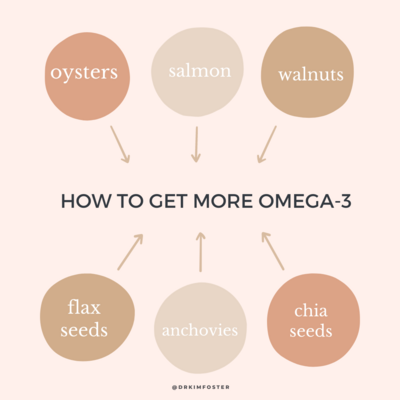
I do, generally speaking, promote healthy nutrition first and foremost. But I also think there’s a role for certain supplements. Of course there are always new, fancy supplements being touted as part of a preventive, anti-inflammatory lifestyle. Here are the ones I think, currently, have the most evidence in favor of them: omega-3, vitamin D, multivitamins, calcium, magnesium, and possibly selenium (the subject of a future post). But this is all subject to change, as research rolls out.
4. Exercise
Every time I turn around I see more studies published demonstrated more health benefits to exercise. And sometimes I think: Do we really need more research to prove what we already know? That notwithstanding, you really are making a big mistake by not figuring out a way to get more exercise into your life. It’s an important part of an anti-inflammatory lifestyle. But–easier said than done, right? Rest assured, every little bit helps. A little exercise, in any form, is better than none. (But if you’re going to choose just one, with anti-inflammation as your goal…I’d choose yoga.)
A very interesting report was published recently about the power of the mind-body connection (something I’m a big believer in). You’ve probably heard about the placebo effect: the fact that some patients will feel better on a medication, even if there’s no active ingredient–a phenomenon that provides strong evidence for the mind-body connection. But the dark side of the placebo effect is called the “Nocebo Effect”. Meaning, if you believe something is going to make you ill, or give you a negative side effect, it’s more likely to.
In this report, which analyzed the whole body of research on the nocebo effect, researchers found that when people were advised by health care practitioners, typically doctors and nurses, about side effects or harm, they were more likely to report experiencing those symptoms in follow-up visits. It’s not that patients were making it up–they were truly experiencing them.
“Patients are highly receptive to negative suggestion, particularly in situations perceived as existentially threatening, such as impending surgery, acute severe illness, or an accident.” the researchers wrote. “Persons in extreme situations are often in a natural trance state and thus highly suggestible.”
So all of our diligence with informing patients about potential side effects could actually be causing harm?
This also makes me think of pharmacist’s instructions–I’ve had many patients come back to me admitting they’d been too terrified to even start the medication I’d prescribed, after their little chat with the pharmacist.
And, am I the only one who finds those pharmaceutical commercials hilarious? You know, the ones where fully half the air time is spent issuing increasingly dire warnings at auctioneer-speed…(this drug may cause hair-loss or heartburn or night sweats…do not take if breastfeeding, pregnant, on blood thinners, if it’s a full-moon…)
How many of you have had surgery, or even a minor procedure, and after being given a horror-story list of possible dread outcomes, you are then required to sign a paper to say you’re OK with all of that? It’s called “informed consent” and it’s something we’re required to do, legally and ethically, but there’s little doubt it can cause major anxiety for some patients. And stress…well, stress can absolutely cause physiologic change and illness in people.
Some people want to know about every possible outcome. Some people would rather not know. What do you think: is ignorance bliss? If it’s true, like this research is showing, that we are actually inciting symptoms merely by the power of suggestion, are we causing more harm than good, for the sake of full-disclosure? But…how could we possibly justify withholding this information, thus plunging back to the days of patronizing medicine, where “doctor knows best”?
Thorny topic, no?
I have long maintained that stress is a major, under-recognized trigger for illness and unwell. I have little doubt that stress contributed to my own health crisis.
And now, an important study has come out validating that connection. The study was published this week in the British Medical Journal. It was a large study, looking at more than 68,000 adults over the age of 35. Individuals were given a stress score, through a survey that asked about things like losing sleep due to worry, difficulty concentrating, and having trouble overcoming difficulties.
And, alarmingly, they found that people with more distress were more likely to die. Most of the causes of death were due to heart disease, strokes, and cancer. Moreover, the effect of stress was dose-dependent. Which means: the higher an individual’s stress score, the higher their chance of dying. To account for the chicken-and-egg possibility that it’s illness that causes stress, and not the other way around, the researchers discounted all early deaths–ie. people who had died within 5 years of the observation period. (Making it much less likely that it was the illness that caused the distress.)
And they still found a strong association between stress and death.
In fact, as reported on MedicineNet:
People with mild distress were about 29% more likely to die of heart disease or stroke than people who reported no distress. Mild distress didn’t seem to raise the risk for cancer.
People with moderate levels of distress were about 43% more likely to die of any cause. And people with high levels of distress were 94% more likely to die during the study than people with no distress.
All this is not really a surprise. But having the research to back up common wisdom on stress and health is extremely validating. And, ultimately, helps with my endgame: encouraging more people to get serious about stress management.
If you’re on board with that plan, where to start? You need a toolbox! Here ya go: