






How many times have you said “I want to… but now’s not the right time” or “I want to… but it’s not realistic”
This thought pattern is incredibly common and incredibly destructive. Because talking ourselves out of things doesn’t protect us, it just shrinks our lives.
I’ve seen this “obstacle obsession” in my work, in my own life, and in the lives of people who WANT to change but never quite make the move.
But I’ve also seen that once you understand this pattern, it loses a lot of its power. So in this article, I’m talking about why this voice is so convincing and what we can do to stop it from controlling our decisions.
Fear Disguises Itself As A Wise Advisor
Let’s go back to the example, “I want to… but it’s not realistic.” It sounds like a wise assessment, right?
Well, this is the first mistake we make. We think we are being sensible, but what’s really happening is fear.
Fear is sneaky in that it sounds sensible, responsible, and even intuitive. But it’s crucial to understand that fear is not trying to help you build a meaningful life. Fear is trying to keep you safe, familiar, and unchanged.
This is because our brains evolved to prioritize threats. Centuries ago, our survival depended on our ability to scan for danger and imagine what could go wrong to avoid it.
Today, our brains are still using this survival operating system, even though modern life no longer requires it.
The result?
Making decisions from a place of fear.
When you think about making a change in your life, such as changing careers or starting a business, your brain immediately focuses on the potential threats:
“What could we lose?”
“What might go wrong?”
And because negative thoughts light up the brain more strongly than positive ones, they feel more urgent, more believable, and more important to address.
And that’s exactly how fear gets promoted to the role of ‘lead decision-maker.’
So how can we demote fear and take back control of our decisions?
Stop Asking “Is This Realistic?
One of the most common questions I hear when someone wants to make a change is this:
“Is this realistic?”
It sounds like a smart and mature question to ask ourselves, but it doesn’t come from wisdom; it comes from fear. So what we’re really asking for is permission to not engage with the idea or dream we have.
And that’s exactly what we get… stagnation and inaction.
So instead of asking “Is this realistic?” ask yourself:
- “If I decided to make this work, what would I need to learn?”
- “Who has done something like this before — and how did they figure it out?”
- “What’s the smallest, lowest-risk version of this that I could test?”
Those questions keep you in motion by encouraging engagement, not inaction. This single shift can open doors you didn’t even realize you were closing.
- Spot The “Yes, But…” Pattern
The “Yes, but…” pattern sounds like:
- Yes, I want to change careers, but I don’t have the time.
- Yes, I want to get healthier, but my schedule is chaotic.
- Yes, I want to start writing, but I’ve tried before, and it didn’t work.
All of these “buts” feel valid and reasonable, and that’s exactly why so many of us unknowingly get caught up in this pattern.
But here’s what’s really happening:
The moment you say “yes, but…”, you’re already negotiating your way out of commitment.
It keeps us not only stuck in inaction but also overthinking. Because most of the reasoning behind that “but” is actually anticipation.
We’re anticipating what could go wrong and choosing not to engage purely on what our minds are projecting, rather than concrete evidence.
Recognize What This Pattern Actually Costs You
Obstacle-focused thinking doesn’t just slow you down. It changes how you see yourself over time.
The more we do it, the stronger its hold over us becomes. Because each time we choose to listen to that “but,” we reinforce the identity that:
“I’m someone who wants things… but doesn’t follow through.”
This leads to us:
- Overestimating how hard change will be
- Underestimating our progress
So we start procrastinating and delaying, telling ourselves we’ll reevaluate when things are calmer, clearer, or more certain. And then, without realizing it, months turn into years.
So you see, caution can be useful in moments. But when caution becomes a personality trait, it slowly shrinks the range of your life.
Shift From Conditional Thinking To A Commitment Mindset
There’s a subtle mindset pivot that is an incredibly effective way to overcome ‘obstacle obsession.’
It’s the shift from a conditional mindset to a commitment mindset.
A conditional mindset sounds like this:
“I’ll try… if it’s not too hard.”
“I’ll give this a shot… as long as it doesn’t disrupt too much.”
“I’ll see how it goes… and then decide.”
It’s reasonable, flexible, and low-pressure, but psychologically, it keeps the door open to retreat. And because you’ve kept that door open, you’re much more likely to walk out of it.
A commitment mindset sounds very different. It says:
“This matters to me.”
“I’m doing this.”
“And I’ll adapt as needed.”
Commitment thinking tells your brain that the decision is settled. You’re no longer asking whether this version of your life is worth pursuing; you’ve decided it is.
It’s Time To Throw Your Backpack Over The Fence
There’s a wonderful metaphor I use to help me shift from conditional thinking to commitment thinking. It’s called the “Backpack Over the Fence” moment, and it perfectly illustrates the power of making a small but irreversible act of commitment.
I share it in my latest YouTube video:
If you’re reading this and realizing that you’ve been talking yourself out of your dreams for years, I want you to know that you’re not alone.
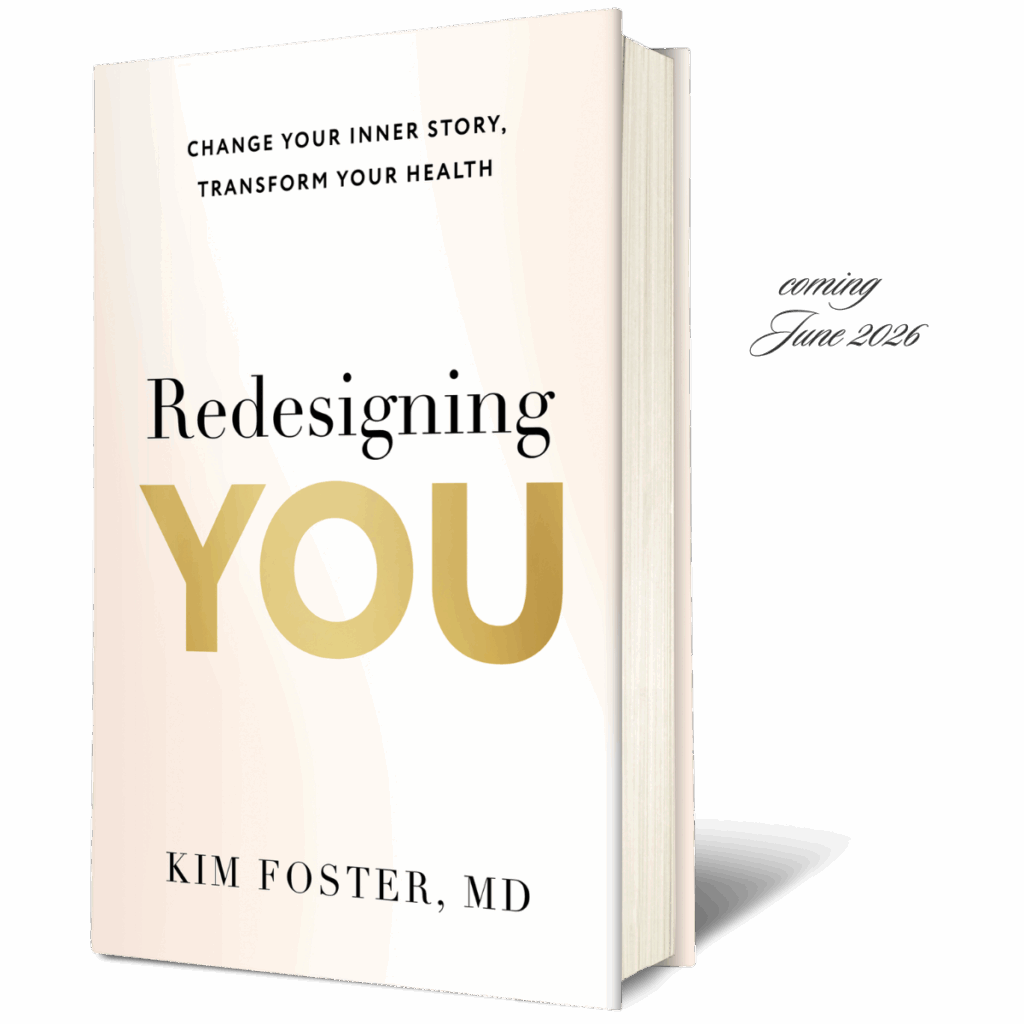
I explore this topic much deeper in my upcoming book, Redesigning You. It’s an ideal read for anyone going through a season of change or reinvention, no matter where they are on their journey.
Resources:
- Dr. Kim on Instagram: https://www.instagram.com/drkimfoster/
- Preorder my new book: Redesigning You
- My Free, 5-Day Guided Challenge: The Reset
JOIN THE INSIDER LIST!
If you’re interested in my upcoming book Redesigning You, the Insider List is the best way to stay connected.
You’ll receive early updates, behind-the-scenes notes from the writing and publishing process, and first access to excerpts as they become available.
No spam. Just thoughtful updates, shared occasionally.