







Are you always overthinking? Do you constantly replay conversations in your head? Do you spend hours researching before every small decision?
Many of us struggle with decision-making. But while we might think we’re just being cautious, we’re actually stalling our own progress.
In this article, I’m sharing the psychology behind a lack of decisiveness and six simple shifts to build your decisiveness muscle.
Because you’re not struggling with decisions because you’re incapable, you’re struggling because you’ve trained yourself to hesitate. Here’s how to change that…
1. Trust Yourself to Handle the Outcome
Let’s say you need to make a fairly significant online purchase. Maybe it’s a new laptop, a course, or even just a pair of shoes.
Do you complete the purchase within 20 minutes?
Or do you spend hours researching, comparing reviews, reading Reddit threads, and watching YouTube videos, before deciding you need to sleep on it?
If it’s the latter, here’s what’s happening…
Most people think they need more clarity, more information, more certainty. But what they actually need is a stronger internal position.
Decisive people don’t ask, “What’s the perfect choice?” They ask: “Do I trust myself to handle whatever happens next?”
Because most decisions in life don’t come with perfect information.
- Sometimes the job works out. Sometimes it doesn’t.
- Sometimes the investment pays off. Sometimes it doesn’t.
- Sometimes the relationship grows. Sometimes it ends.
You don’t need to make the perfect decision; you just need to trust that you can deal with the outcome.
If it works, great. And if it doesn’t, you learn from it, pivot, and adjust.
In other words, you trust the future version of you to be resourceful.
2. Decide From Identity, Not Emotion
Most people make decisions based on their emotions. They ask themselves:
- “Do I feel ready?”
- “What if this doesn’t work?”
- “What if I regret it?”
- “What if I choose wrong?”
But the problem with basing decisions on emotion is that emotions react to discomfort.
Taking action feels scary, even if it’s something you really want to do. Whenever we do something unfamiliar, there is a risk of failure, and our brain hates failure.
So, to protect us from failing, our brains tell us we’re not ready, that it won’t work out, and that it will all go terribly wrong.
If we listen to those emotions, we stall, we wait, and we don’t take action.
Decisive people, however, don’t decide based on how they feel in the moment. They decide based on who they are becoming.
They don’t ask whether the decision is safe, comfortable, or likely to succeed. They ask one question: “Does it align with the person I’m becoming?”
Emotional decision-making sounds like “I don’t know if I’m ready.” Identity-based decision-making sounds like “I am becoming someone who plays at that level.”
See the difference?
One is fear-regulation. The other is identity construction.
3. Shorten the Decision Window
Have you ever noticed how, when you first consider doing something, there’s a flash of clarity?
You think: “Oh. I should do that.”
But then you start thinking about that idea on a deeper level, and suddenly the idea feels much heavier.
In the space of a few hours or days, you’ve gone from “That feels right” to “Maybe it’s not for me.”
That’s not because you got wiser. It’s because you opened the door to rumination.
According to a psychological concept known as the Zeigarnik effect, unfinished decisions occupy more mental space than completed ones.
Instead of committing to the decision right away when you felt clarity, you gave yourself too much time to debate. And in that space, fear multiplied.
The brain doesn’t like open loops. So when you keep revisiting an idea without committing to it, the loop stays open, causing low-grade cognitive tension.
Decisive people don’t let rumination happen. Instead, they contain the decision in a short window.
For example:
- For small decisions: Five minutes.
- For medium decisions: 24 hours.
- For big decisions: 72 hours max.
When you put a container around a decision, your brain stops wandering and starts choosing. You preserve that initial clarity and prevent cognitive depletion.
4. Let Go of the Perfect Option
A lot of overthinking comes down to the quiet belief that there is one right answer, and if we choose wrong, we’ll regret it.
But the truth is, most decisions in life are not “right vs wrong,” they’re trade-offs.
For example, say you’re deciding between two job offers.
One pays more. One has more flexibility.
There is no perfect choice here. One choice prioritizes money. The other choice prioritizes freedom.
But because our brain wants both, we decide to wait for a magical third, perfect option to appear.
The result? We’re waiting forever.
This not only prevents us from moving forward, but it also leads to regret.
Psychological research has consistently shown that, over time, people tend to regret inaction more than they do action.
In other words, we regret the risks we didn’t take far more than the imperfect ones we did.
Decisive people let go of the idea of a perfect option and instead choose the option that best meets their criteria.
Here’s a practical tool you can use to stop searching for perfection. It’s called the 70% rule.
Stop waiting for 100% certainty or 100% information. If you have roughly 70% of what you need to make a thoughtful decision, choose now.
Because that last 30%? It’s usually noise and fear anyway.
5. Decisiveness Feels Uncomfortable
Many people assume decisiveness feels like clarity and confidence.
It doesn’t. Most of the time, decisiveness feels like tension, risk, and unease.
Because when you make a decision, especially about something meaningful to you, your nervous system interprets it as uncertainty. And uncertainty registers as a threat.
Most people interpret discomfort as a signal that they’re making the wrong choice, so they avoid the things that create discomfort.
But the truth is, growth is supposed to feel destabilizing.
Whenever you commit to something or take action, whether it’s sending that email, signing up for that course, or launching that offering, there’s a moment of intensity that follows.
You don’t suddenly feel a wave of relief. You feel a wave of unease, like “I shouldn’t have done that.”
This feeling is totally normal. You’ve just moved from possibility to commitment, and commitment brings responsibility, which feels heavy.
So the key is to expect that sensation and know that it signals expansion, not danger.
When you start expecting it to feel slightly uncomfortable, you normalize the sensation, and it stops controlling you.
6. The Final Shift
I’ve got one more shift to share with you, and honestly, it might be the most important one.
It’s about how to build more self-trust so that next time you find yourself at a crossroads, you don’t ruminate. Instead, you decide because you trust yourself to handle the outcome, whatever it may be.
I break this strategy down in my latest YouTube video and dive deeper into the psychology of all 6 shifts, sharing personal examples from my own life.
Watch it here:
And if you want to explore this topic further, check out my free Self-Sabotage Recovery Guide.
It walks you through how to recognize the subtle ways you undermine your own progress, and how to interrupt them before they spiral.
Resources:
- My Free PDF: The Self-Sabotage Recovery Guide
- Dr. Kim on Instagram: https://www.instagram.com/drkimfoster/
JOIN THE INSIDER LIST!
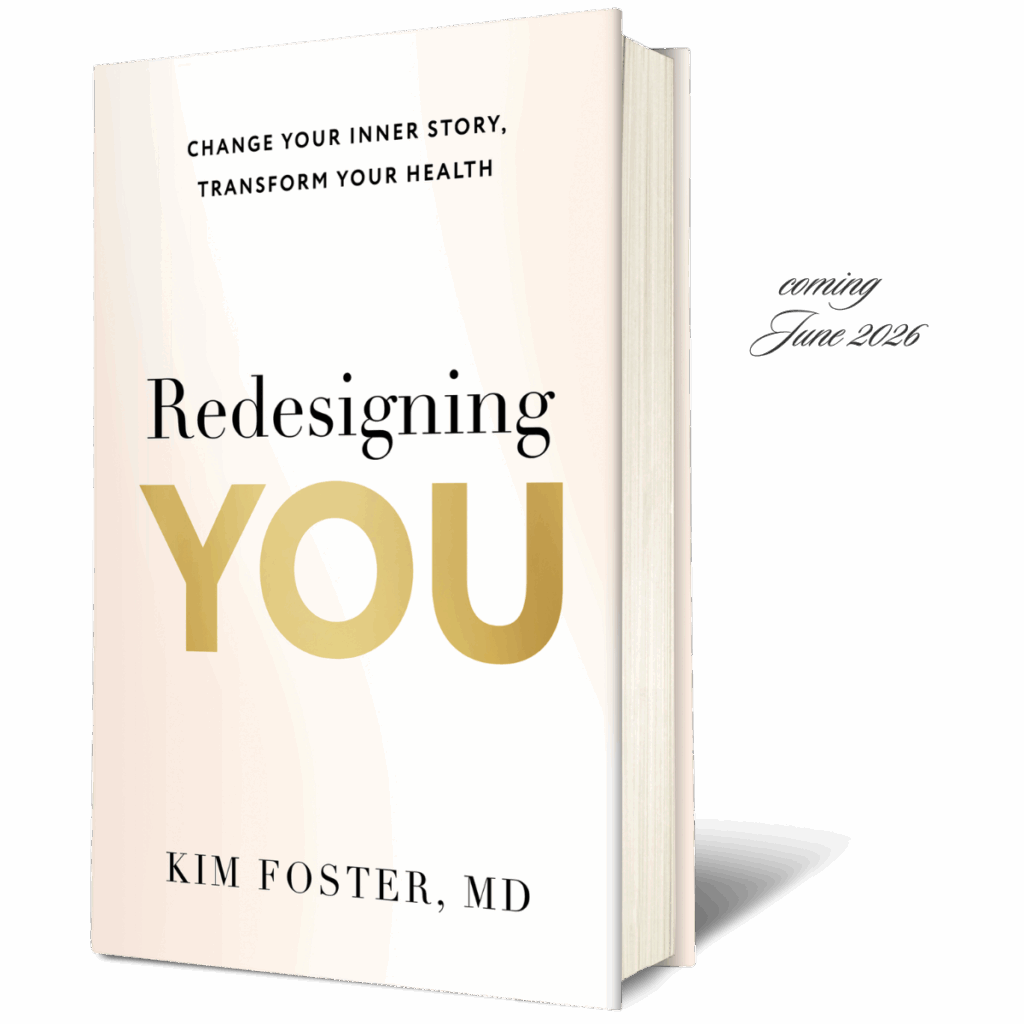
If you’re interested in my upcoming book Redesigning You, the Insider List is the best way to stay connected.
You’ll receive early updates, behind-the-scenes notes from the writing and publishing process, and first access to excerpts as they become available.
No spam. Just thoughtful updates, shared occasionally.