






I used to think I was just “the cautious one.”
The one who hesitated, overthought, and took forever to make decisions.
I told myself it was just my personality… because some people are naturally more careful than others, right?
Turns out, hesitation is not due to caution. Rather, it’s a sign of low confidence.
And once I started working on building confidence, everything shifted.
I stopped second-guessing every move. I started conversations without rehearsing them in my head first. I shared my opinions without getting stuck in the usual overthinking loop.
That’s when I realized… confidence is something that absolutely anyone can build. And in this article, I’m going to show you how to build it in the four areas of your life where it matters most.
Confidence Is An Inside Job
Most people think confidence is something that comes from external sources, like experience, preparation, or permission. We believe that only when we gain this thing will we be ready to take action.
But the truth is, you could gain all the experience, get all the permission, and prepare as much as possible… and still not feel ready.
Why?
Because if your actions don’t match how you see yourself, your brain will resist it. And so, you will continue to hesitate and hold back, even when, externally, everything is set.
Confidence is an inside job. It’s something that you need to believe to feel. And one way to approach confidence as an internal thing is with this question:
“Who would I be in this situation… if I were already confident?”
Here are four areas of life where you can apply this approach, and what happens when you do.
1. Social Situations
Imagine walking into a room where you don’t know many people, such as a networking event or a social gathering.
You feel the insecurity instantly. You become hyper-aware of yourself; The way you’re standing, what you’re saying, and how you’re coming across.
In your mind, you’re telling yourself:
“I’m always awkward in these situations.”
“I don’t really belong here.”
And the moment you tell yourself this, you ensure that’s the identity you’re operating from.
Your behavior then follows this identity. You hang back, wait for others to initiate, and keep conversations short, further reinforcing that belief.
But if you were to shift your identity slightly, your behavior would shift as well.
Perhaps you start to tell yourself, “I’m someone who can connect with people,” or even, “I’m someone who’s learning how to connect.”
The moment you invite in that new identity, you start acting differently. You approach someone, ask a question, and stay in the conversation a little longer than usual.
That’s because confidence doesn’t come first; it follows behavior. Your brain watches what you do and updates your identity accordingly.
2. Making Decisions
Let’s say you’re trying to make a decision and you feel that pressure to get it right.
You tell yourself you need to consider it carefully. But you end up in a cycle of overthinking, weighing every option, and trying to predict every outcome.
And the more you try to think your way to a decision, the harder it gets to make any decision.
If you struggle with decision-making, it’s likely that underneath your hesitation is a belief:
“I always choose wrong.”
“If I mess this up, it says something about me.”
When you’re telling yourself this, whether consciously or unconsciously, of course, you’re going to hesitate, because it doesn’t just feel like a decision, it feels like a test.
Now shift the identity slightly to “I’m someone who can handle what happens next.”
From there, you stop trying to control the outcome and start trusting yourself to respond to it.
Because the truth is, you can’t control how things turn out. But you can control your choices and how you respond.
And that’s where confident people place their focus.
3. Starting Something New
Let’s say you want to put something out there, such as sharing an idea, showing your work, or making yourself a bit more visible on social media.
Then you start getting all the usual negative self-talk, like:
“I’m not ready yet.”
“It’s not quite good enough.”
“I should wait until I’m better.”
So you hold back, convincing yourself it was a bad idea.
Again, this isn’t about ability; it’s about identity. Underneath this self-talk is a belief like “I’m not the kind of person who does this.”
So even when you want to move, something in you resists.
But what if you shifted your identity slightly? What if you told yourself, “I’m someone who puts things out before they’re perfect.”
With this identity, you don’t need everything to feel finished or perfect; you just need it to be ready enough to act.
And this is key because the quicker you act, the faster you will build confidence.
The moment you put it out there is the moment you start creating momentum. And that tells your brain that you’re stepping into this new identity, and that you’re the type of person who feels the fear and does it anyway.
4. Handling Feedback
Now what if you did the thing that scared you — you put yourself out there, you started something new.
But… it didn’t go the way you hoped.
Maybe there were some negative comments, or maybe the response was just too quiet.
Immediately, you start telling yourself:
“That wasn’t good.”
“I’m not great at this.”
“Maybe this just isn’t for me.”
In just a few seconds you’ve written off the idea completely.
If you’re operating from an identity of uncertainty and insecurity, every outcome carries a lot of weight. Any piece of feedback that’s even slightly negative feels like proof that you’re not good enough.
Here’s how to get better at handling feedback and start trusting yourself more…
Instead of defaulting to throwing in the towel, tell yourself, “I’m someone who learns and adjusts.”
With this new, more empowering identity, the same situation looks very different.
It’s no longer: “This didn’t go well—what does that say about me?”
It becomes: “That’s useful—what can I learn from it?”
Because you can’t control how people respond, but you can control what you make it mean.
And when you adopt that growth mindset, asking “What worked? What didn’t? What do I adjust?”, every outcome stops defining you, and starts developing you.
Confidence Starts Here
Most people think they need to feel confident before they act. But in reality, it’s the other way around. You act first, then your brain slowly updates the story of who you are based on what you repeatedly do.
So the real question isn’t “Am I confident enough for this?”
It’s: “What would I do here if I already trusted myself?”
If you want to go deeper into this and learn how to build confidence that actually sticks (not just a temporary boost), I break it down in detail in my latest YouTube video:
And for further guidance, check out my Self-Sabotage Recovery Guide. It helps you uncover the beliefs that are keeping you stuck in hesitation, and more importantly, how to start shifting into an identity of deeper self-trust.
Resources:
- My Free Guide to Getting Out Your Own Way: Self-Sabotage Recovery Guide
- Dr. Kim on Instagram: https://www.instagram.com/drkimfoster/
JOIN THE INSIDER LIST!
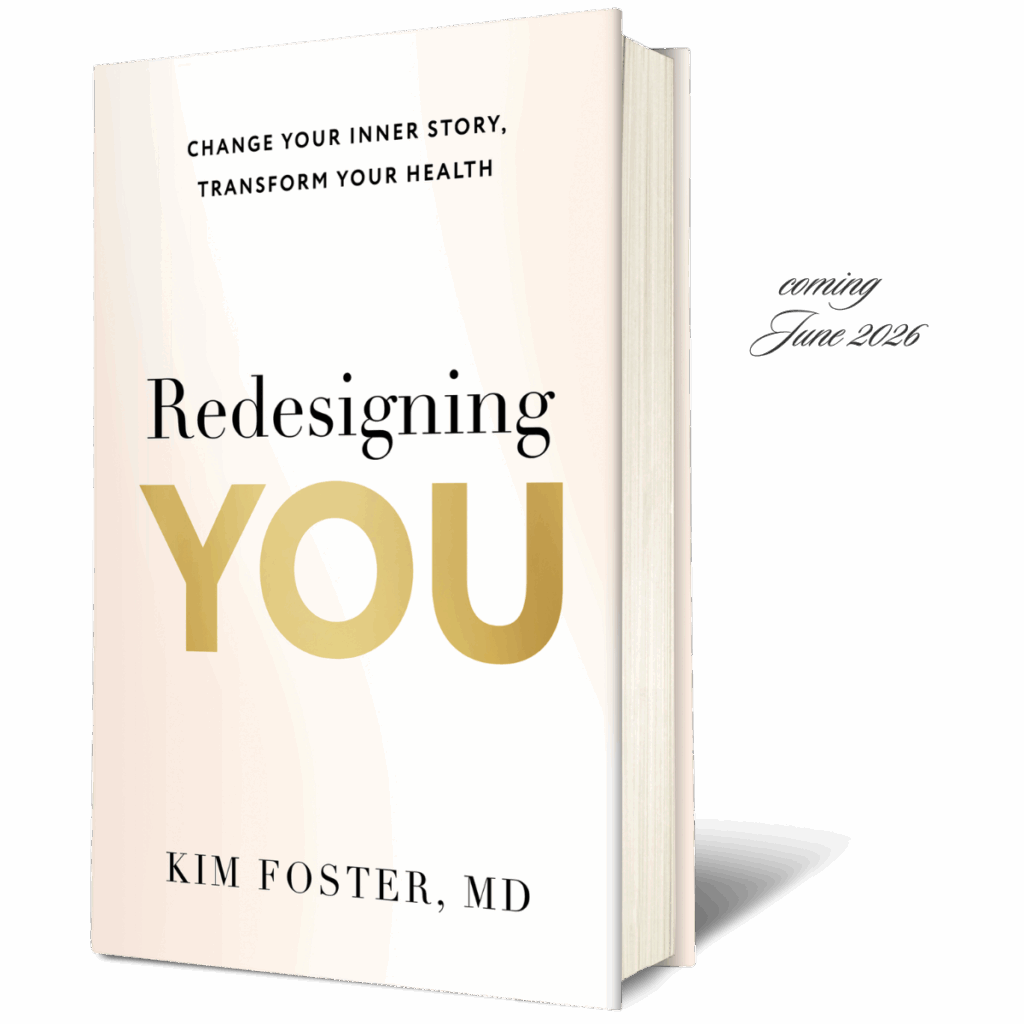
If you’re interested in my upcoming book Redesigning You, the Insider List is the best way to stay connected.
You’ll receive early updates, behind-the-scenes notes from the writing and publishing process, and first access to excerpts as they become available.
No spam. Just thoughtful updates, shared occasionally.