








Do you feel like you’re doing everything right, but somehow you’re not moving any closer to your dreams?
I get it. I felt like that for many years, and it’s something I’ve seen in many of my clients, too.
You’re reading all the right books, setting goals, and changing your routine. Yet, you still don’t see any improvement.
So what’s going on?
Most likely, one of the following five subtle but sneaky mindset blocks is running the show.
Trap 1: Future Self Disconnection
We’ve all done it. It’s 10:30 at night, and you’re on the couch. You had planned to get up early the next morning and go for a run or work on something important.
But instead you think: “Eh… I’ll just stay up a little later.”
So you choose one more episode or a little more scrolling.
It feels harmless until tomorrow morning comes and you’re exhausted, frantic, and skipping the very thing you said you were going to do.
Why do we do this? Why do we prioritize the wants of ‘present us’ over the desires of ‘future us?’
Research by psychologist Hal Hershfield reveals a very interesting answer…
By analyzing brain scans, Hershfield found that the brain lights up in the same pattern when someone thinks about their future selves and other people. In other words, your brain treats your future self almost like a stranger.
So staying up late when you want to get up early the next morning comes easily because at that moment, it doesn’t feel like YOU are paying the price. It feels like someone else will deal with it later.
But while ‘future you’ may feel like a different person to your brain, in reality, it’s, of course, you. The version of you today and tomorrow has the same brain, same habits, and same environment.
That’s why the only thing that changes your life is when you start making decisions on behalf of the person you’re becoming, not just the person you are right now.
One way you can start to do this is by asking this simple question:
“What would ‘future me’ be grateful for right now?”
Trap 2: Self-Limiting Perspective
Here’s another common situation: Someone invites you to do something slightly outside your comfort zone, or you have an idea for something new you think you might like to do.
And almost instantly, a thought pops up: “I’m just not the kind of person who does that.”
We say these things very casually, almost like they’re neutral facts about ourselves, like our eye color.
But each time we say or think something like this, we’re telling our brain, “This is who I am.”
Our brain then starts filtering the world through this self-limiting perspective. So if, for example, you believe you’re not a disciplined person, your brain will start collecting evidence for that until it becomes part of your identity.
This is why identity work is so powerful for change. Because real transformation rarely starts with behavior, it starts with who you believe yourself to be.
So, one of the most powerful questions you can ask yourself is:
“Is this actually a fact… or just a story I’ve been telling myself for years?”
Trap 3: The Victim Vortex
Two people can have the same idea for changing their lives, but very different reactions to it.
Maybe they want to start a business, change careers, or move somewhere new.
One person starts listing the reasons it might be possible. The other starts listing the reasons why it wouldn’t work out.
Now our personal life circumstances are real and do determine the number of obstacles we face. However, the problem is when those circumstances start to become someone’s entire identity, creating the story that “Nothing I do will work.”
In psychology, this is known as learned helplessness. When people repeatedly experience situations where they feel powerless, they can start to generalize that feeling. Then, eventually, they stop trying to change things, even when change becomes possible.
But the truth is, even when circumstances are difficult, there are almost always small areas where you still have influence. And those small areas of influence are where change begins.
So the way to get out of this Victim Vortex isn’t to pretend life is fair or to ignore real challenges in your life.
It starts by changing the question of “Why is this happening to me?” to “Given the reality of my situation… what power do I still have?”
Trap 4: Obstacle Obsession
Another thing that can keep us from taking risks and moving towards our dreams is the obsession with obstacles. This is when we notice the threats much more than the opportunities.
For example, maybe we get the idea to start a podcast or YouTube channel. Even though we know it’s what we want to do, our mind still starts producing negative thoughts like:
- “The market is saturated.”
- “I’m starting too late.”
- “What if people judge me?”
This trap stems from something called negativity bias. From an evolutionary perspective, noticing threats was more important than noticing opportunities, because threats posed a real threat to our survival.
But in this modern world, most of the things our brain perceives as threats (like other people judging us) are not dangerous to our survival. And when our brain obsessively focuses on these obstacles, it stops noticing the possibilities.
One way to shift some of your mental energy away from the barriers is to ask yourself:
“What is the next tiny step I could take?”
Trap 5: The Misery-to-Miracle Fallacy
Here’s something I’ve seen many times in my life and the lives of my clients:
You decide you’re going to change your life, let’s say, by finally launching a new business.
At first, you feel motivated, fired up, and you’re thinking: “This is it. Things are going to be different now.”
So you start doing the hard things, waking up super early and working hard on your goals.
You push your rhythms way out of what feels good, thinking that if you grit your teeth and do this stuff for a short period of time, you’ll get the result you want, then you can relax and go back to normal.
But about two or three weeks in, you realize not much is happening, despite your hustle. And in this moment, the excitement fades, and you start thinking, “This isn’t working.”
This lack of progress is actually very normal. You can do the workout or practice the skill day after day and feel like nothing is happening.
Behavioral science shows that small, repeated actions compound over time in ways that are almost invisible at first. In fact, it can take months (or even years) until you realize something has shifted.
But so often, we give up before we can reach that point.
So, How Can We Overcome These Mindset Traps?
In my latest YouTube video, I share tried-and-tested ways to move past these blocks, along with two other super common ways of thinking that keep us trapped.
You can watch it here:
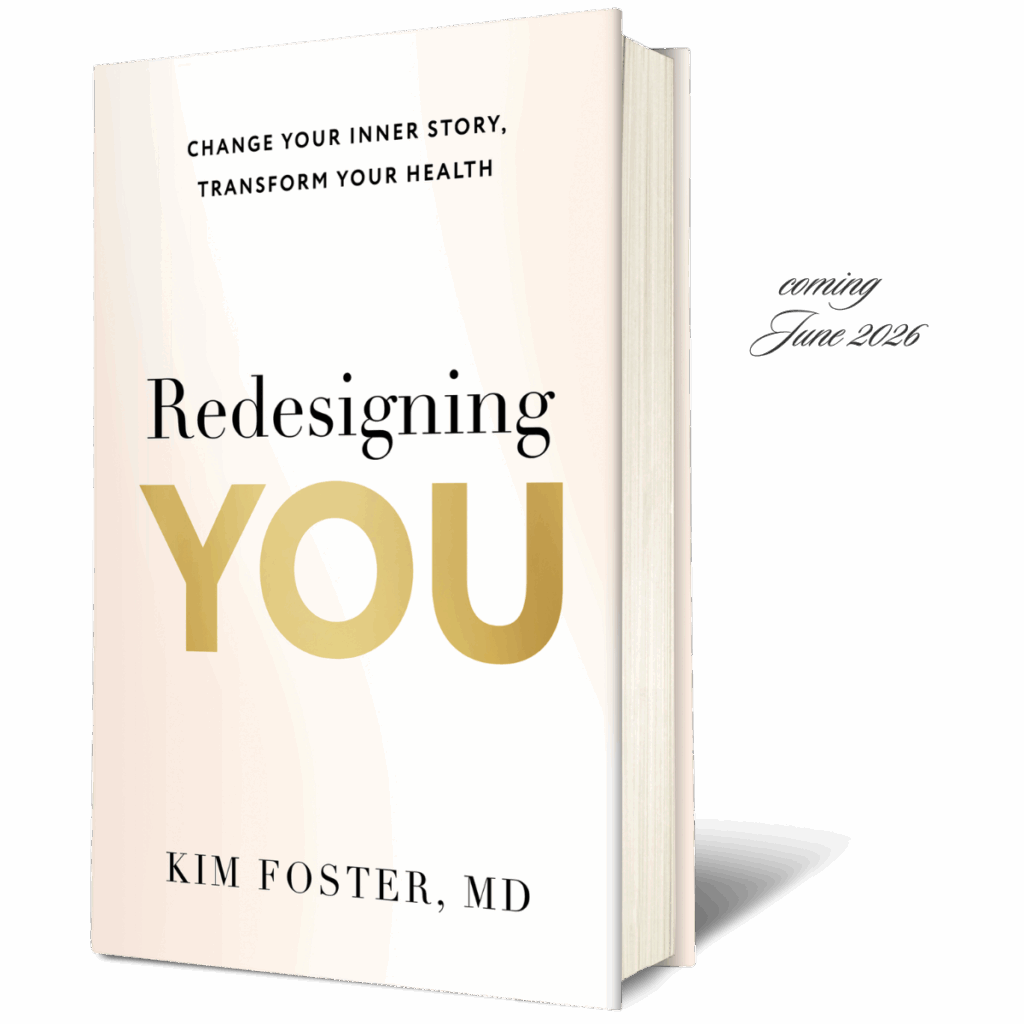
And if these mental blocks resonated with you, you’ll love my upcoming book ‘Redesigning You.’ It’s all about how to change your life from the inside out, and includes a deep dive into these 7 mindset traps. Redesigning You is out June 2026, but you can preorder it here!
More Resources:
- Preorder My Upcoming Book: Redesigning You
- Identify The Patterns Keeping You Stuck with: Self-Sabotage Recovery Guide
- Dr. Kim on Instagram: https://www.instagram.com/drkimfoster/
JOIN THE INSIDER LIST!
If you’re interested in my upcoming book Redesigning You, the Insider List is the best way to stay connected.
You’ll receive early updates, behind-the-scenes notes from the writing and publishing process, and first access to excerpts as they become available.
No spam. Just thoughtful updates, shared occasionally.