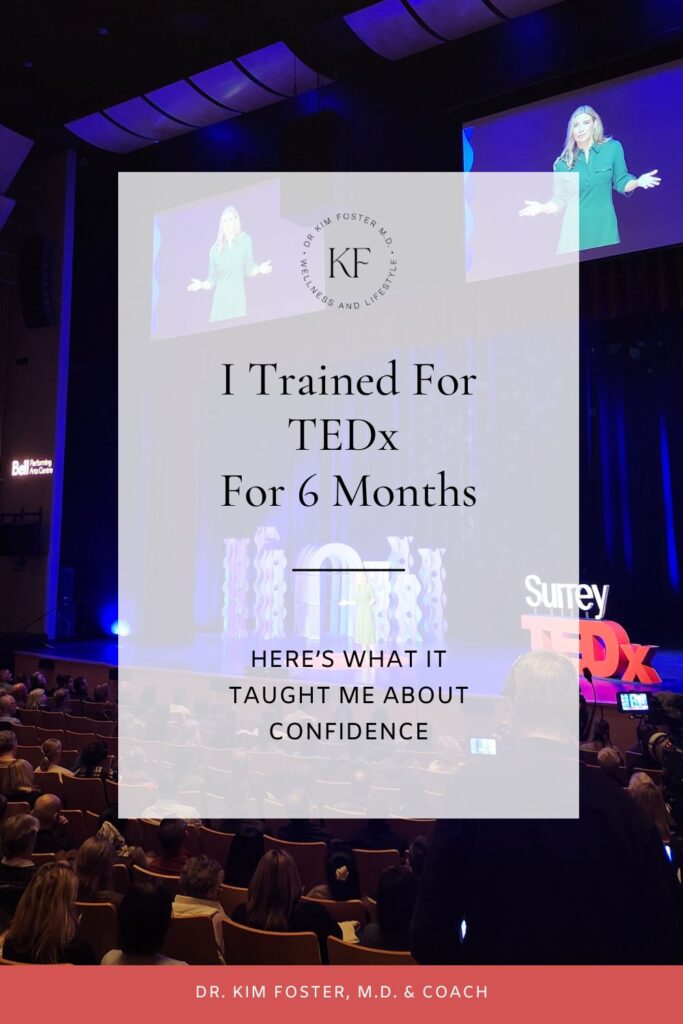
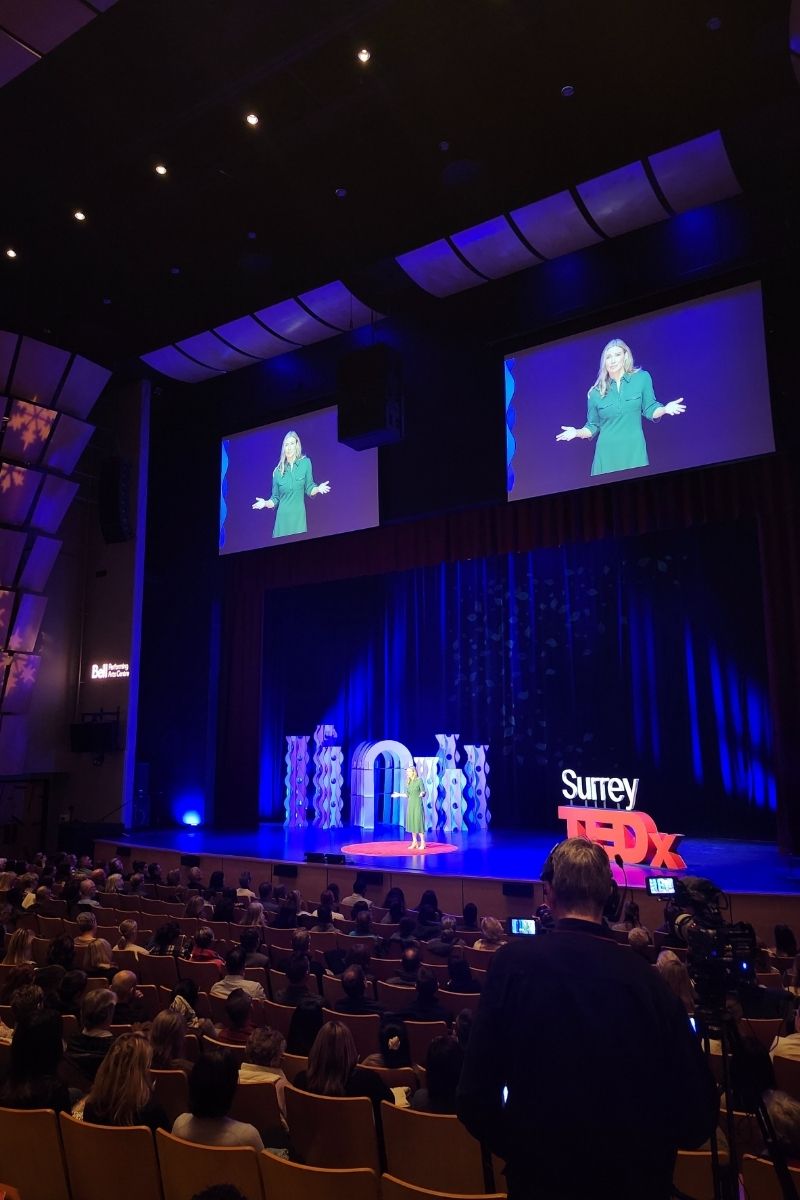






Last year, I received an invitation to speak at TEDx, and I spent the next 6 months learning how to be a better speaker.
But what I didn’t expect to happen during that time was to rewire my entire relationship with self-doubt.
In fact, I realized that what was holding me back wasn’t my lack of public speaking skills, but my lack of confidence.
And while there were many excellent speaking hacks I picked up throughout those 6 months, the biggest (and most impactful) lessons I learned were related to confidence.
So in this article, I’m walking you through the six biggest confidence lessons that came out of six months of TEDx training. These are not just personal insights but clear, practical tips you can apply to your own life, too.
Lesson 1: Confidence Comes After Commitment, Not Before
Here’s the first thing TEDx training taught me:
Confidence is not the starting point. Commitment is.
We often think that we need to FEEL confident before we can act. But really, we just need to be willing to commit.
I said yes to TEDx before I felt ready. And from that moment, the decision was made, the timeline was real, and the reps were non-negotiable.
And it was here that something interesting happened.
I didn’t suddenly FEEL confident. But I started behaving like someone who took herself seriously.
I trained like a speaker before I believed I was one.
That matters because confidence is a lagging indicator. Psychologically, it comes after repeated evidence, not before it.
Research on identity-based behavior shows that when you act from identity, like “I’m the kind of person who shows up,” your brain catches up later.
So if you’re waiting for confidence to arrive before you begin, here’s your permission slip: Commit first. Confidence is earned in motion.
Lesson 2: Self-Doubt Doesn’t Disappear. It Loses Authority
Training for TEDx didn’t magically eliminate self-doubt. Self-doubt still showed up. It just stopped being in charge.
Before this process, doubt had authority in my life. If it appeared, I listened, I hesitated, I second-guessed myself.
But when I began my TEDx training, something shifted.
The schedule didn’t care how I felt. The reps didn’t pause because I was uncertain. The work continued, whether I felt ready or not.
And slowly, my relationship with self-doubt changed. It went from decision-maker to background noise.
And this is important, because confidence doesn’t mean you never doubt yourself. It means doubt doesn’t get a vote.
Cognitive science backs this up: thoughts aren’t commands, and emotions aren’t instructions; they’re information — sometimes helpful, sometimes outdated.
Confidence grows when you learn you can act with doubt present and still be okay. Each time you move forward anyway, your nervous system starts to understand that “we can do this.”
So if you’re waiting for self-doubt to disappear before you act, let me reframe this for you:
Self-doubt isn’t the problem. Letting it run the meeting is.
Lesson 3: Stop Self-Monitoring. Start Being Present
For a long time, I thought confidence meant doing more… creating more energy, more warmth, more engagement.
But my TEDx training revealed the opposite. What we often label as a lack of confidence is actually over-monitoring.
Over-monitoring looks like:
- Watching yourself while you speak
- Checking how you’re being received
- Adjusting in real time to other people’s reactions
I did this for years, observing myself from the outside and focusing on how I was being perceived.
But when I started my TEDx training, I quickly realized that what I was actually doing was never being truly present to what was happening or where I was.
I knew this habit had to go. I had to learn to stand still, slow down, finish a sentence, and let it land.
At first, I felt uncomfortable and exposed. But over time, I saw that the less I stopped watching myself perform, the more present I became.
And presence reads as confidence.
Performance psychology explains that excessive self-monitoring disrupts fluency and authority because your brain can’t fully access what it knows while it’s busy scanning the room.
So if you want to feel more confident, do less, interfere less, and trust that you don’t need to manage the moment to make it work.
Lesson 4: Confidence Is Built With Structure, Not Motivation
We’re often told that to feel confident, we must psych ourselves up with motivational words and affirmations.
But my TEDx training made something very clear to me: confidence doesn’t come from motivation, it comes from structure.
I didn’t rehearse when I felt inspired. I rehearsed because it was on the calendar.
In all honesty, many days I didn’t feel confident or motivated, but I showed up anyway, relying on structure rather than motivation.
And psychologically, this matters as motivation is unreliable, fluctuating with mood, energy, stress, hormones, and life.
But structure creates safety. Every time you show up, even when you don’t feel like it, your nervous system learns that this is a structure it can trust.
That’s when confidence starts to settle in, not as hype or excitement, but as steadiness.
So stop chasing motivation, and start trusting your systems. Rather than asking yourself, “Do I feel like this today?” start asking, “What’s the next piece I need to work on?”
Lesson 5: Stop Trying to Feel Confident. Start Keeping Promises to Yourself
For years, I thought confidence came from mindset; saying the right affirmations or thinking positive thoughts.
TEDx training taught me something far more practical: confidence grows from self-trust.
Self-trust is built by keeping promises to yourself.
Every rehearsal I completed, every section I refined, every time I showed up prepared, I added quiet proof that I could follow through.
Psychologists call this self-efficacy: your brain’s belief that you’re capable because you’ve proven it before.
Our nervous systems are constantly seeking safety. So every time you do something, your nervous system asks, “Based on past experience, can I trust this?”
If you’ve previously followed through on your promises, your nervous system answers with, “Yes, we can trust this.”
In other words, your nervous system doesn’t respond to hype like affirmations and motivational videos; it responds to proof. And proof comes from behavior.
So if you want to build confidence, ask yourself: Where can I keep one small promise today?
Lesson 6: The Reframe That Ties Everything Together
In this week’s YouTube video, I dive deep into these 5 lessons on confidence, and share one more, which is probably the most important lesson of them all.
Lesson 6 is the reframe that ties all the previous lessons together.
To discover what it is, watch the full episode on YouTube now:
And if this topic resonates with you, I invite you to join The Reset. It’s a free 5-day challenge that will help you step into who you’re becoming, not through hype, but through alignment and structure.
Resources:
- Join The Reset: My Free 5-Day Challenge To Upgrade Your Identity
- My Free Class for Health Coaches: How To Build A 6-Figure Health Coaching Business Using One Signature Program
- Dr. Kim on Instagram: https://www.instagram.com/drkimfoster/
Download my FREE Ultimate Morning Routine Menu

FREE CLASS!
Looking to take your wellness journey to the next level?
The 3 Secrets For Stepping Into A Meaningful New Career Without Wasting Time Or Money
- find out why health & wellness coaching is a skyrocketing industry that can provide the freedom and fulfillment you’ve been craving
- discover the 3 biggest myths about health & wellness coaching that will hold you back (and what the truth is instead)
- learn the secret sauce for getting amazing results for your clients (and building a profitable business as a wellness coach)
…and more!